
Belen Cerezo: Cuerpo-territorio (or territory-body-earth). Research-creation. Work in Progress.

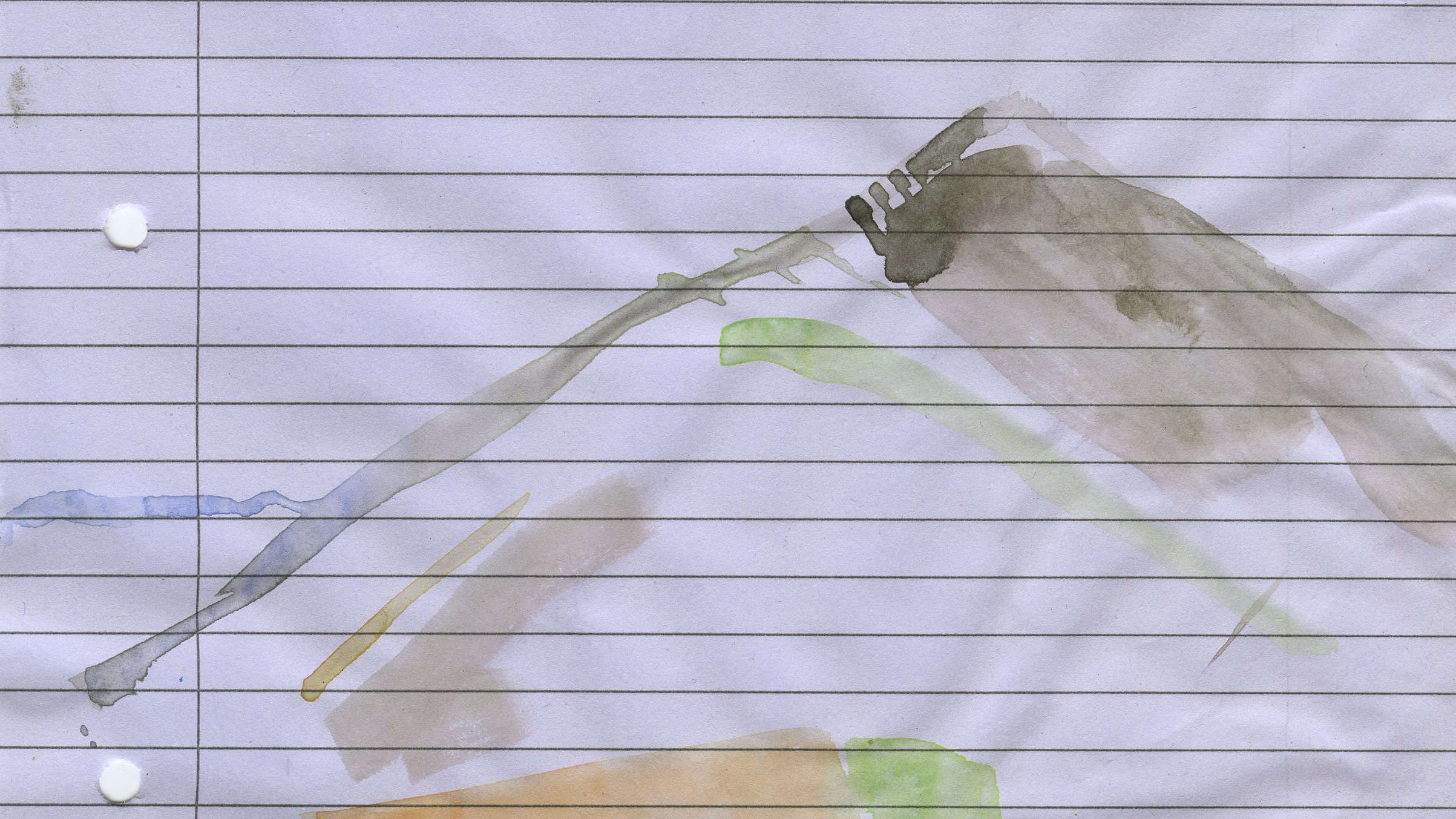
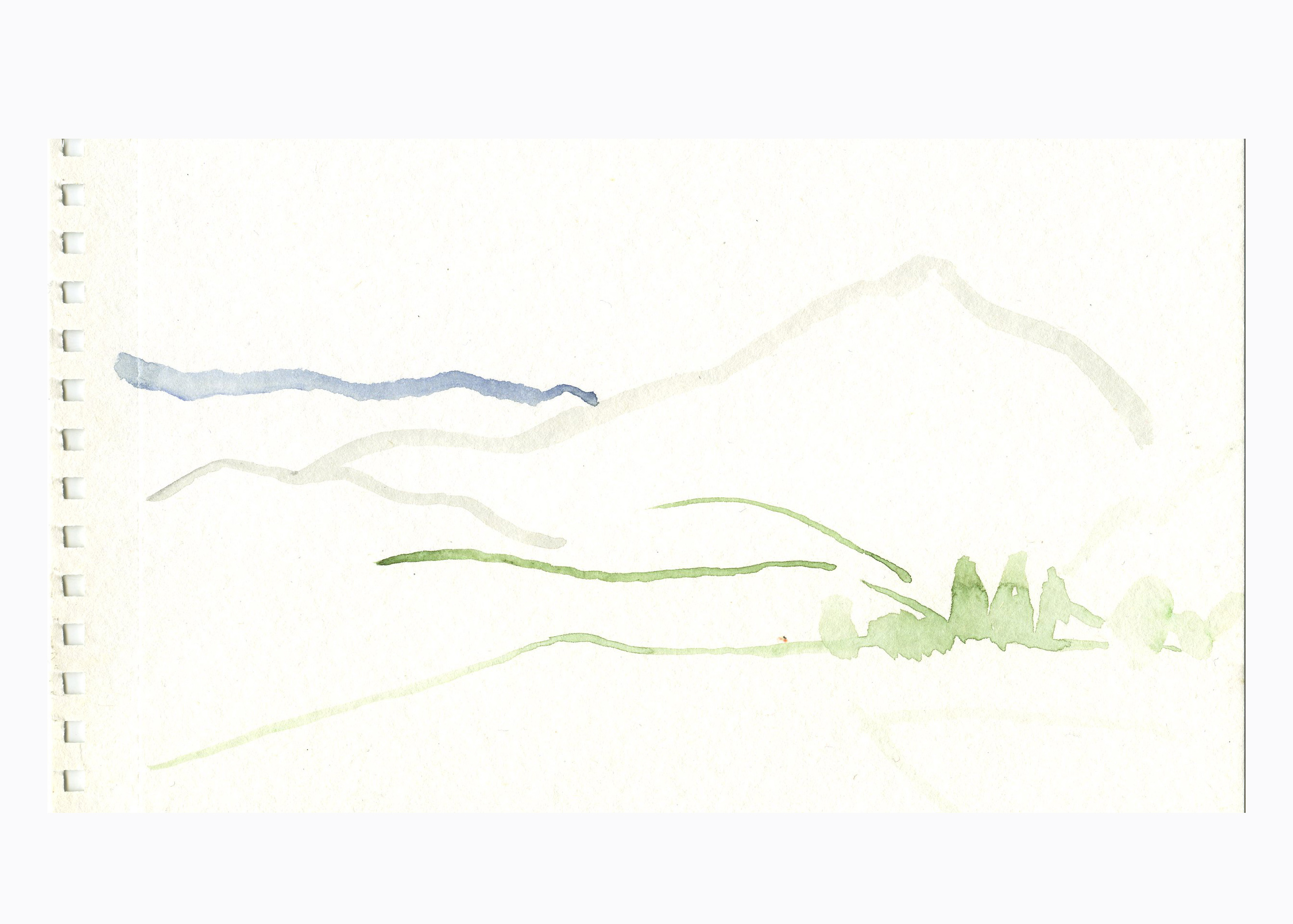


Landscapes in-situ. This is a series of drawings I have made last years in-situ. In-location. In-situation. In front of the mountains, just when it began to rain.
Somehow I decided to use scholar notebooks for these drawings and I even painted on the notebook cover.
I used watercolours and brushes for these drawings. When using watercolours one must be firm, there are no options to make corrections or changes.
I have also intervened one of the landscapes. On top of the mountains I collaged a diagram of the water cycle.
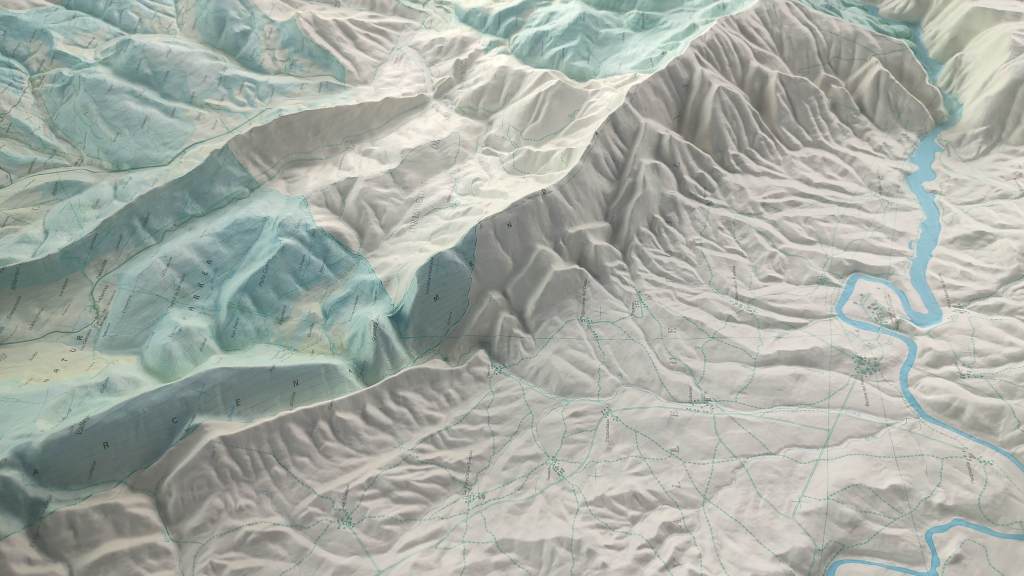

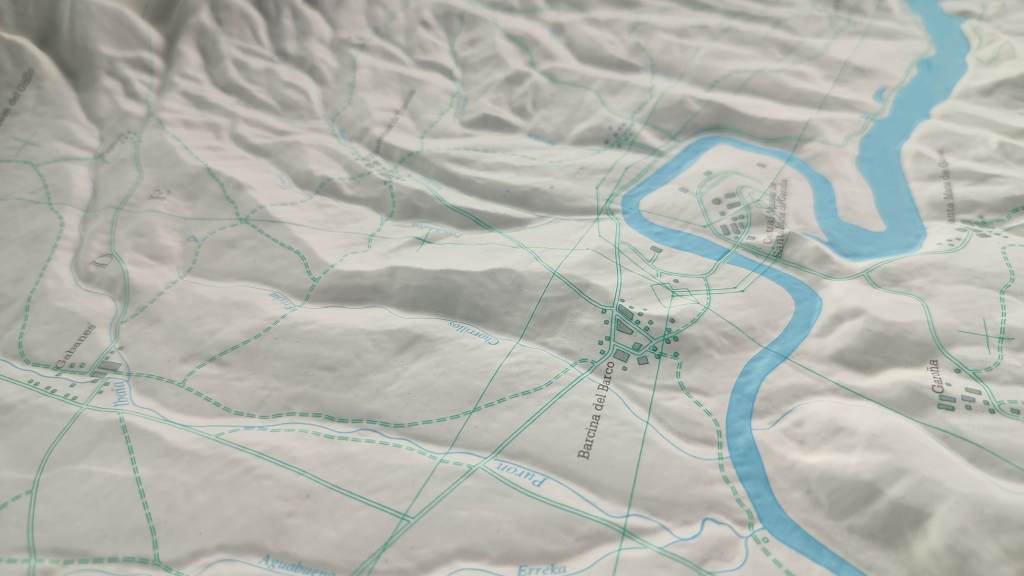
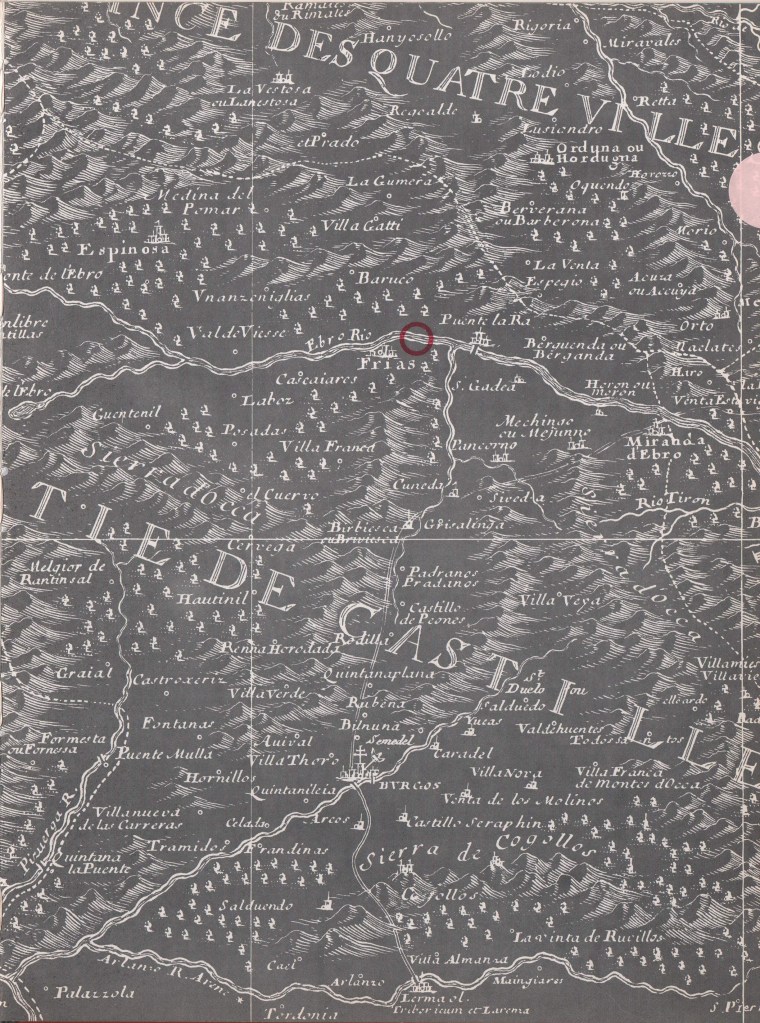

Landscapes out-situ. Here, the first three photographs show a model of an area, the river and the mountains. It was a plastic model and the sun had eaten the colours. Then we have an old map of this area with a red dot that shows the location of the nuclear power plant that appears in the next photographs. This nuclear plant was installed in the meander that appears in the previous photos.
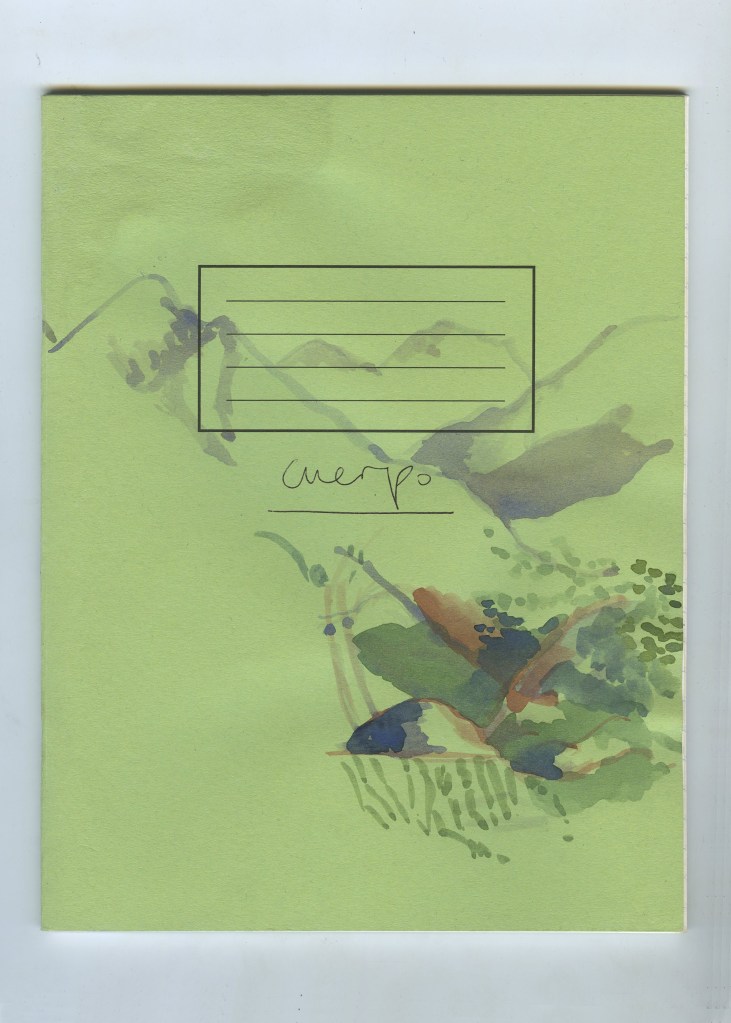
The fist day I was drawing in the land in September 2021, I made this drawing. I wrote the word “body” in between the mountains.
This spring, in 2025, I came across the notion Cuerpo-territorio (or territory-body-earth) that emerges from the community feminisms of Abya Yala, and I immediately remembered the green notebook.Among other issues notion of body–territory allows us to understand the consequences of capitalist accumulation on both human and non-human life. Lorena Cabnal (2010) explains that this approach involves “the conscious recovery of our first territory—the body—as an emancipatory political act,since it has historically been a contested territory under patriarchal systems. Furthermore, this struggle is intertwined with the recovery and defense of land as a territory.”
The notion of body–territory tells us that: “It is impossible to cut out and isolate the individual body from the collective body, the human body from the territory and landscape.” (Gago, 2019) (Julia Martí, p. 39). Further, it has been highlighted that “The power of feminisms that speak of body–territory is that they propose another notion of possession in terms of use, not of property, […] ‘to have’ means to be part. Not to own as property. Being part therefore implies recognizing the interdependence that composes us, that makes life possible” (Gago, 2019) (Julia Martí, p. 39)
 ART RESEARCH ECOLOGY
Leave a comment